
What is it about forests that makes them so fecund for our imagination? Last month, I led a creative writing workshop on our Into the Forest theme for the States of Independence festival. We were struck by how many of our oldest and most enduring stories are set in forests. And the rich symbolism of forests as a site of the extraordinary and other-worldly as well as the Unconscious. Certainly forests can have a dark sub-text to them. Famine, infanticide and cannibalism underpin the story of Hansel & Gretel, for instance. Here you can see a wonderful retelling of that fairytale by Neil Gaiman and illustrator Lorenzo Mattotti. But woodlands are just as haunted and haunting in contemporary novels too. I’m reviewing some here to add inspiration if you’re thinking of writing something for our latest submission window (still a month to go!) on the theme Into The Forest.
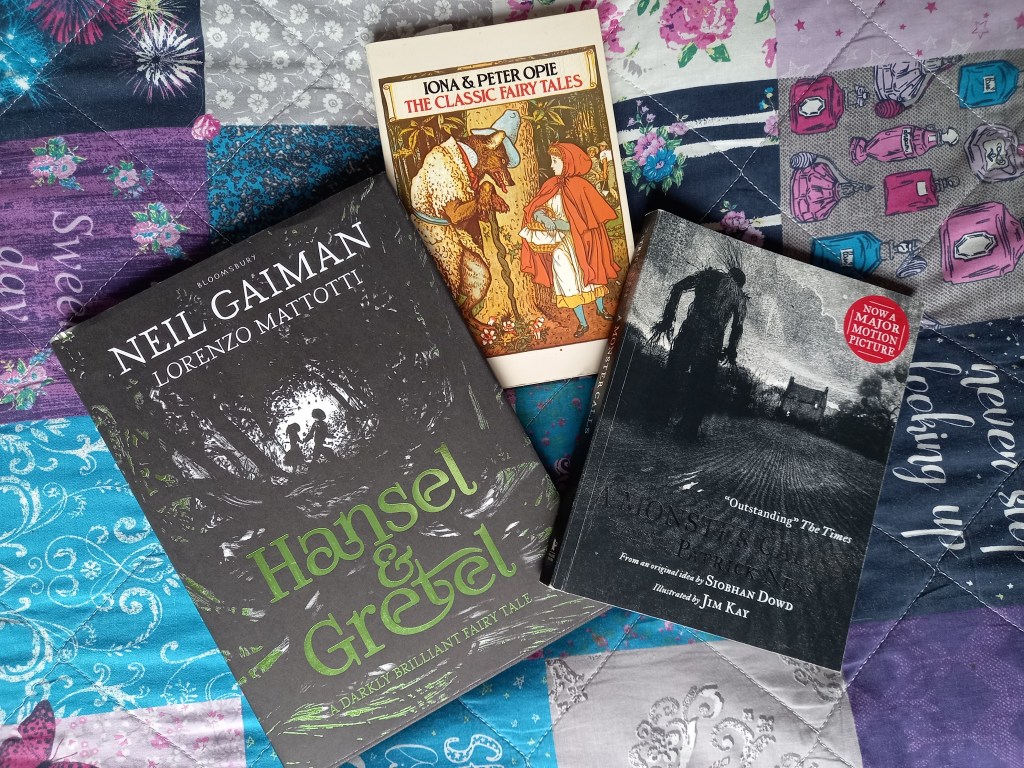
Interesting how children’s fiction and folktales provide some of our darkest forest stories. One such brilliant fable is A Monster Calls, from Patrick Ness. He conjures an invasive tree Monster to embody the wildness of grief in a 13-year-old boy whose mother is dying. ‘It set its giant hands on either side of his window, lowering its head until its huge eyes filled the frame … Conor’s house gave a little groan under its weight. I have come to get you, Conor O’Malley, it said.’ Terrifying. It reminds me of that scene from Tolkien where Frodo hides from the Black Rider in the shadows of Woody End. And of course, Tolkien also gave us talking, walking trees in the mythical Ents led by Treebeard. Fantastical trees can sometimes be won over as allies but you definitely don’t want them stalking you as prey.
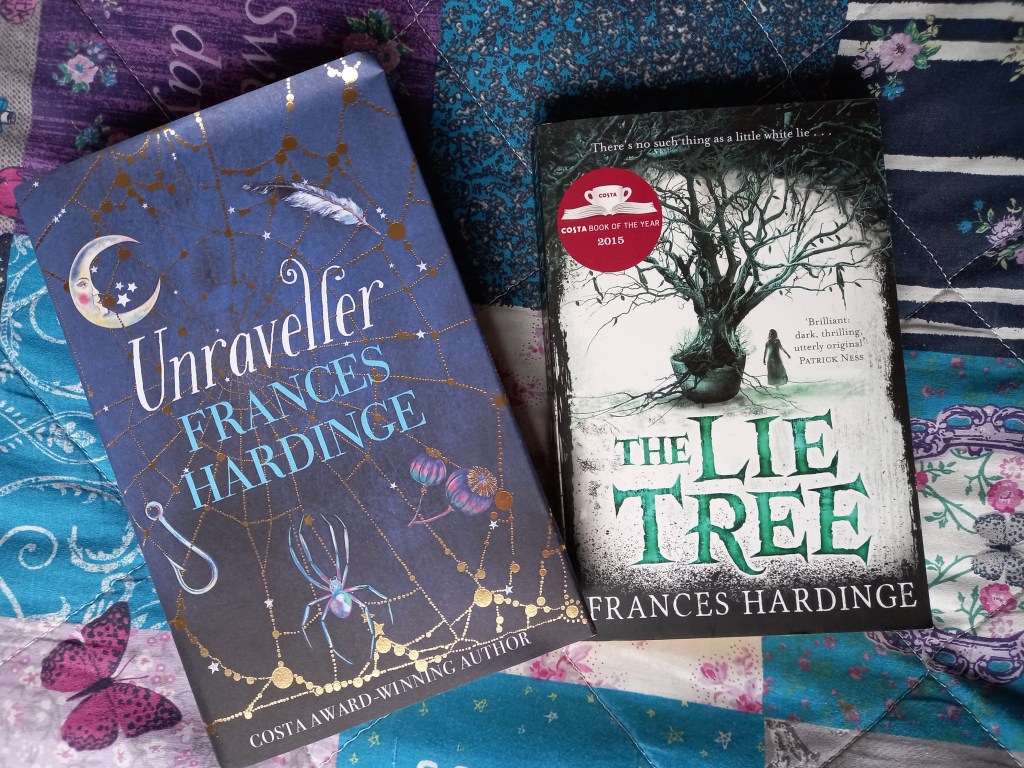
A favourite author of mine who plays with the symbolism of trees is Frances Hardinge. She captures the imaginations of children and adults alike and is a genius at bringing metaphors vividly to life and running with them. In her breakout novel, The Lie Tree, she drops a fantastical tree into the world of Victorian fossil hunters and Christian ideologues. The Lie Tree only bears fruit when it is fed lies and as in Eden, that fruit brings forbidden knowledge to any who consume it. Hardinge’s heroine, 12 year old Faith, realises the strange plant is sentient and ready to strike dark bargains with the desperate:
‘The light glistened on slender, black-blue leaves, long thorns, dull golden pearls of sap glowing on black knobbed stems … Faith saw the illuminated foliage flinch, wrinkle and subside, hissing with the angry sibilance of a beast disturbed.’
The Lie Tree blew me away but Hardinge’s latest novel, Unraveller, takes the power of magical trees to another level. In this fully realised fantasy world, the Wilds are a deceptive stretch of enchanted forest in the country of Raddith. Humans share this world with the creatures of the Wilds; ‘shape-shifting braags, dagger-toothed marsh horses, dancing glimmers and seductive ‘pale ladies’’. None are more lethal than the Little Brothers spiders who lay curse-eggs in the unsuspecting. Only one human can lift the curses, a boy called Kellen. He has been gifted, or cursed, with the power to unravel all tangled things from cloth to hatred. Along with a girl who was once turned into a heron, Kellen must journey far into that beguiling and deadly forest. Marvellous and thoughtful fantasy.
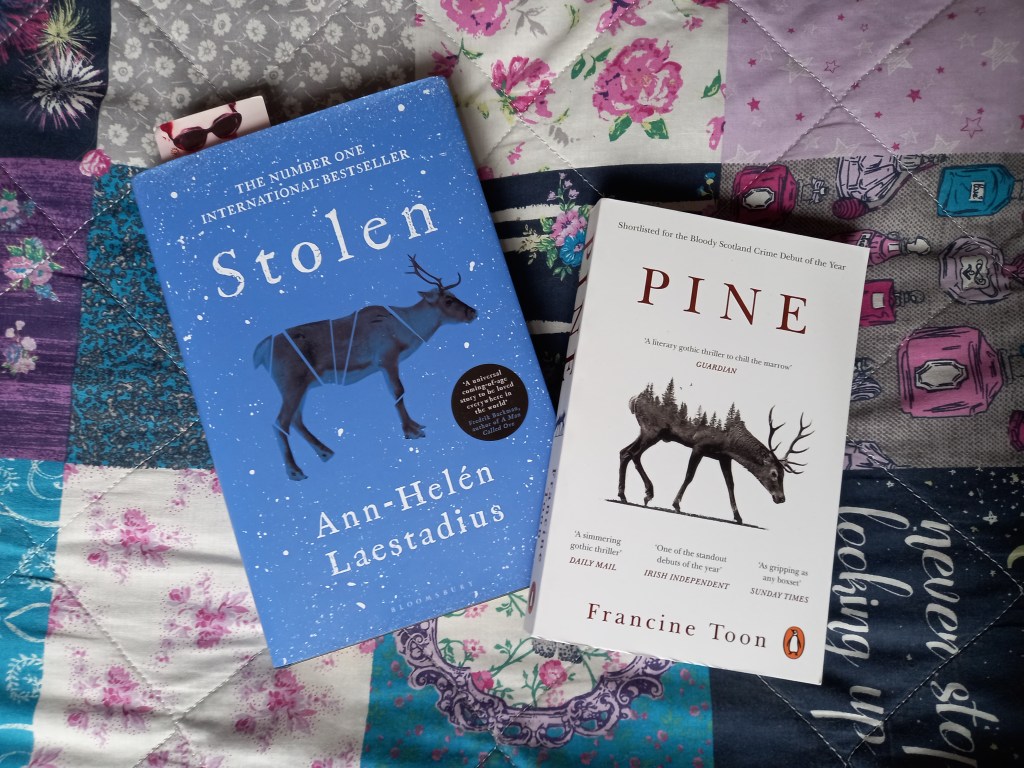
Last of my recommendations are a couple of crime novels on my current reading pile. For years now, I’ve been bingeing on Scandi-Noir. So often it features killers running through silver birch forests that shine like bones in the dark. Stolen approaches murder from a different direction. This beautiful, coming-of-age story from Swedish writer, Ann-Helen Laestadius opens with a nine-year old girl skiing through a Nordic forest at night. When she reaches the reindeer corral, she sees a man with a knife butchering her reindeer calf. It’s a violent gesture of anti-Saami hatred. Through the child’s eyes, we experience the trauma and perils of living as a Saami in a Swedish community that despises them. This is delicate immersive writing that doesn’t flinch away from dark social themes.
And featuring a similar cover, I’m also looking forward to Pine by Francine Toon, a gothic crime thriller set in a Scottish Highlands forest. Shortlisted for Bloody Scotland Crime Debut of the Year2020, it looks a treat for any fan of Nordic crime. Or Tartan Noir, as they’re calling it. So, hopefully plenty to inspire your own writing there. Next month, I’ll review forests in science fiction. Meantime, keep checking our weekly #WritingThe Forest prompts and blogs.
 Space Cat Press