When Little Red Riding Hood steps into the forest, we know she is entering a different world. Outside she could see for miles across a patchwork of fields and farms. But in the wild tangle, her view extends for only a few paces beyond the path. When sight is restricted other senses come alive.
Category: Guest blog
A Green Lung that Allowed Me to Decompress (Guest Blog: Emma Lee)
I was horrified when I learnt that the city council were proposing to fell 21 of those trees. One of the reasons given was to "cut crime.” But trees don’t commit crimes and I did not want to lose my green lung.
On Magnificence, Memories and Miracles (Guest Blog: Teika Marija Smits)
Mountains are magnificent, of course, but to my mind forests are equally awe-inspiring. It’s just that their beauty is of a quiet, more mysterious kind. Unlike mountains, which are all Oi! Look at me! they keep their magnificence to themselves.
Guest Blog: Abida Akram
Like many immigrants, I thought I was extremely privileged to be growing up in two cultures. I thought I could take the best of each, unfortunately, I often experienced the worst of both.
Writing the Lockdown (Guest blog: Michele Witthaus)
Prior to the Covid-19 lockdown, I had been writing poems at the rather sedate rate of one or two a month, sending some out for publication and experiencing a string of small successes along the way. I wasn’t hugely productive but that didn’t bother me particularly. My day job as a journalist kept me busy enough with churning out thousands of words on demand.
About ‘Considering the Stars’ (Guest blog: Teika Marija Smits)
As L.P. Hartley wrote in The Go-Between: “The past is a foreign country: they do things differently there.” It can be hard for us in the present, with our modern sensibilities, to resist the urge to judge those who lived in the past. Certainly, when I’ve been carrying out research for any of my pieces of historical fiction I’ve found myself scandalized by some of the “norms” of the past. (Don’t get me started on Victorian dentistry…) Yet, what unerringly heartens and inspires me is how humans have solved, or overcome, the many hurdles that life on this planet has thrown at them. That, for me, is where the real magic lies. How did we come to inherit the many, many gifts of the present that we enjoy, indeed, take for granted, from all those inhabitants of the past?
12.56pm Eastern (Guest blog: James Walton)
I dreamed in cerulean. The churn underneath creation’s folly, the lisp in thinking aloud, the slow breath towards nebula. Because I did not speak until my seventh year, my day was all sky. In July 1969, around 1.00pm our time, the black and white television in the crowded classroom held out the hand of otherworld. In my fifteenth year, this stuttering breach of language around letters to avoid, stretched. The quiet is a choice, soundlessness was a place.
Guest blog: Simon Fung
Space is weird. The more we looked into the beyond, the more we realised that things don’t behave that way we thought they should. It started with small things, like planets moving ever so slightly faster than they should be, then suddenly time was no longer constant, and before we knew it particles were doing things they had no business doing while on earth (at least not without a great amount of effort).
Crucial but Marginalised Voices (Guest blog: Emma Lee)
Women have made about 11% of people who’ve made it into space. Despite this, it actually makes more sense to put women in space. Generally they’re smaller and lighter which means they use up fewer resources – not critical in a short trip but on a long mission could prove vital – on average men required around 20% more calories a day and woman expend less than half the calories of men despite similar activity levels.
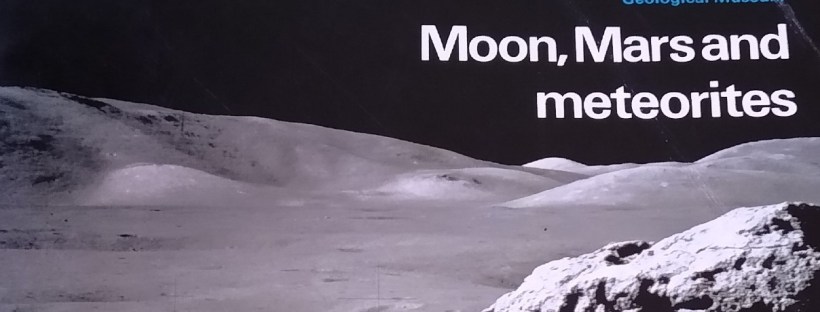
Moon, Mars, and Meteorites (Guest blog: J.K. Fulton)
Science fact and science fiction packed my bookshelves, and when I turned to writing short stories as a teen, the call of space made itself felt in the subjects I chose. Even now, more than 40 years later, I can see that my story Scattered Across the Stars was heavily influenced by that HMSO publication; it features both a meteorite and a tentative explanation for mankind's fascination with the universe beyond our own tiny globe.